Family
10-Day Gilgit-Baltistan Family Tour (By Air)
Skardu • Hunza • Gilgit 10 Days / 9 Nights 4.9
PKR 417,500for the group
about $1,502
A fortnight of gold that moves every year — and the one rule that lets you time it.
Roughly mid-October into the first week of November, and it is about a fortnight rather than a month. The turn follows the first hard frost, so it moves between years. Higher villages in Gojal colour first, then Karimabad and Nagar, then Gilgit and Skardu. Pakistan Travellers runs the valley through the whole window.
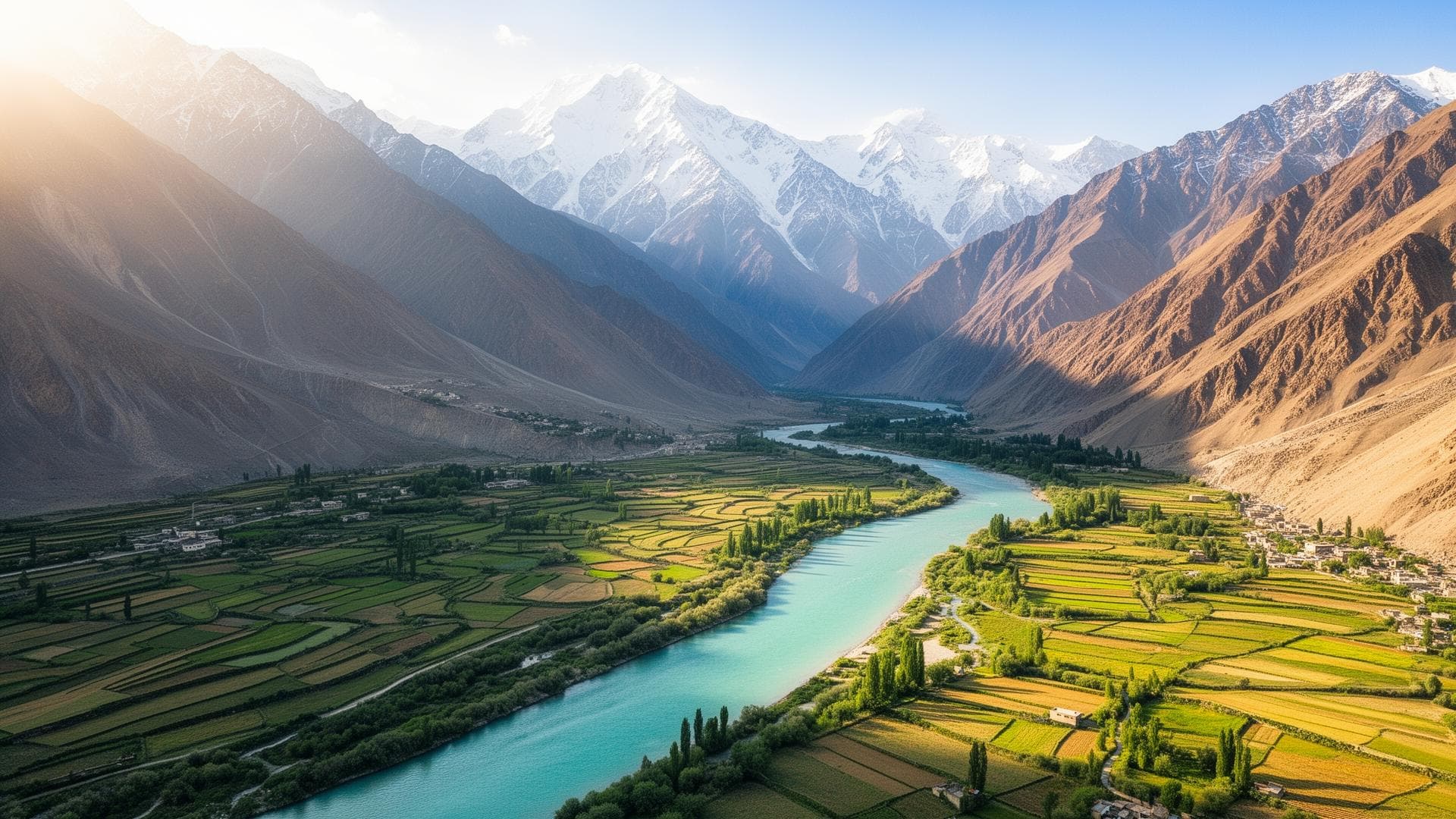
Everyone photographs Hunza in April for the blossom. The valley is arguably better six months later, when the poplars along the irrigation channels and the apricot orchards behind the forts turn every shade between lemon and rust, the summer haze has gone, and there is almost nobody there. The difficulty is that autumn is short and nobody can tell you its dates in advance. What can be explained is how it moves — and that is enough to plan around.
The turn is triggered by the first hard frost, not by the calendar. A mild September pushes it into November; an early cold snap can bring it forward by ten days. Any operator publishing "peak colour: 20 October" is guessing, and people book international flights against those guesses.
The rule that actually works is altitude. Cold arrives at height first, so colour runs downthe valley. Upper Gojal — Passu, Gulmit, Sost — goes first. Karimabad and Nagar follow roughly a week behind. Gilgit, several hundred metres lower, is later again, and Skardu later still. So a trip that moves down the valley over its middle days can follow the colour rather than chase it, and a week that looks early in Karimabad is often perfect an hour further up.
If you have one week and no flexibility, the last week of October catches most of the valley in most years. That is the honest version: most, not all, and most years, not every year.
Karimabad and Altit. The orchards below Altit Fort are the picture people have in their heads — seven-hundred-year-old walls above trees the colour of a struck match. Baltit Fort takes the afternoon light. The old town is walkable and worth doing slowly.
Duikar, before dawn. The viewpoint above Karimabad gives you Rakaposhi, Diran and Ultar catching first light with the whole valley still in shadow beneath. It is cold enough in late October that most people underestimate it and regret the extra layer they left behind. It is also the single best half-hour of an autumn trip.
Nagar and Hopper. Across the river, terraced villages with walnut trees that go copper rather than gold, and the Hopper glacier bowl below — grey ice against orange slopes. Fewer visitors cross the bridge than should.
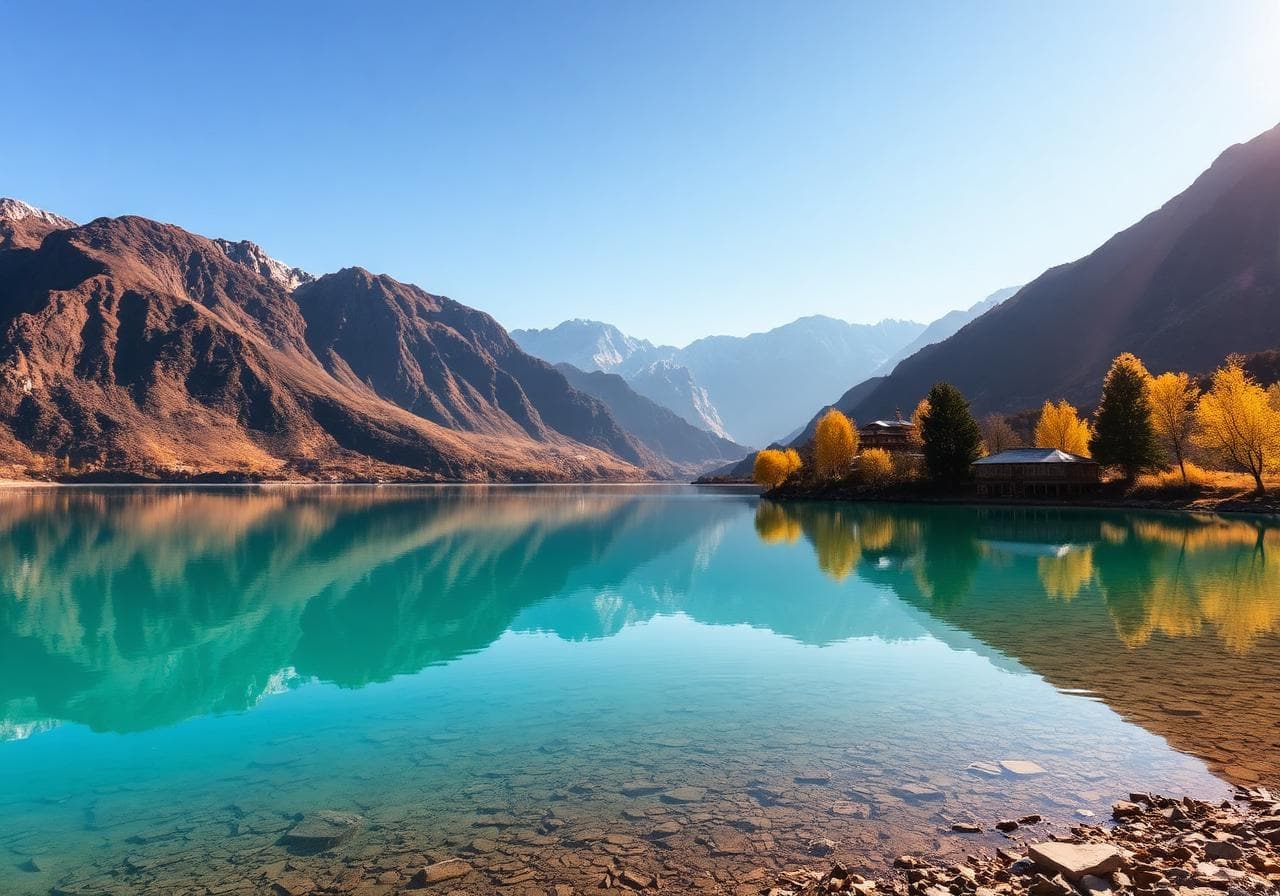
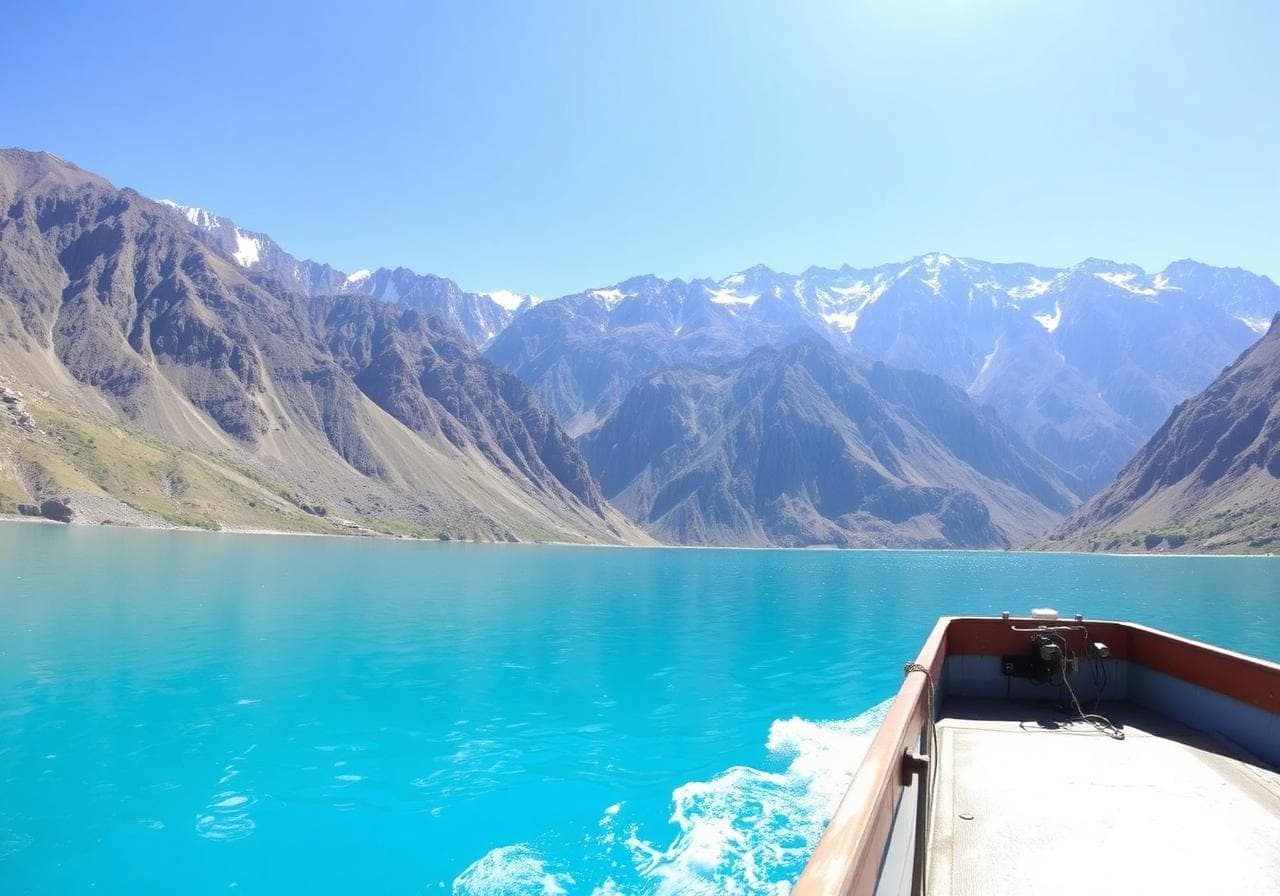
Attabad and Passu. The lake reads differently in autumn: turquoise against amber instead of against summer green. Further up, the Passu Cones with larch and poplar at their feet, and Borith Lake behind for migrating birds on their way south.
Naltar. A rough jeep track from Nomal, which is why so few make it, and larch that turns a colour nothing else in the region does. Three small lakes at the top, each holding its own shade. See our Naltar Valley tour for what that day involves.
Skardu turns later than Hunza and is less about mass colour than about specific places. The apricot orchards through Shigar valley are the reason to come — the same trees that make the valley famous in spring, going gold along the road to the fort. Khaplu, two hours east, does the same with a smaller crowd.
The Katpana cold desert works better in autumn than in summer, because the low sun crosses the dunes at an angle all afternoon rather than only at either end of the day. Manthokha falls still runs. What you lose is Deosai: the plateau closes for winter at roughly the moment the colour peaks, so a trip promising both autumn colour and Deosai is promising a coin toss. Choose one and we will tell you honestly which your dates can carry.
A practical note on getting there. The Skardu flight is weather-dependent year round and autumn is no worse than summer, but the road in is a long day. Do not plan an onward international connection for the morning after you leave Skardu.
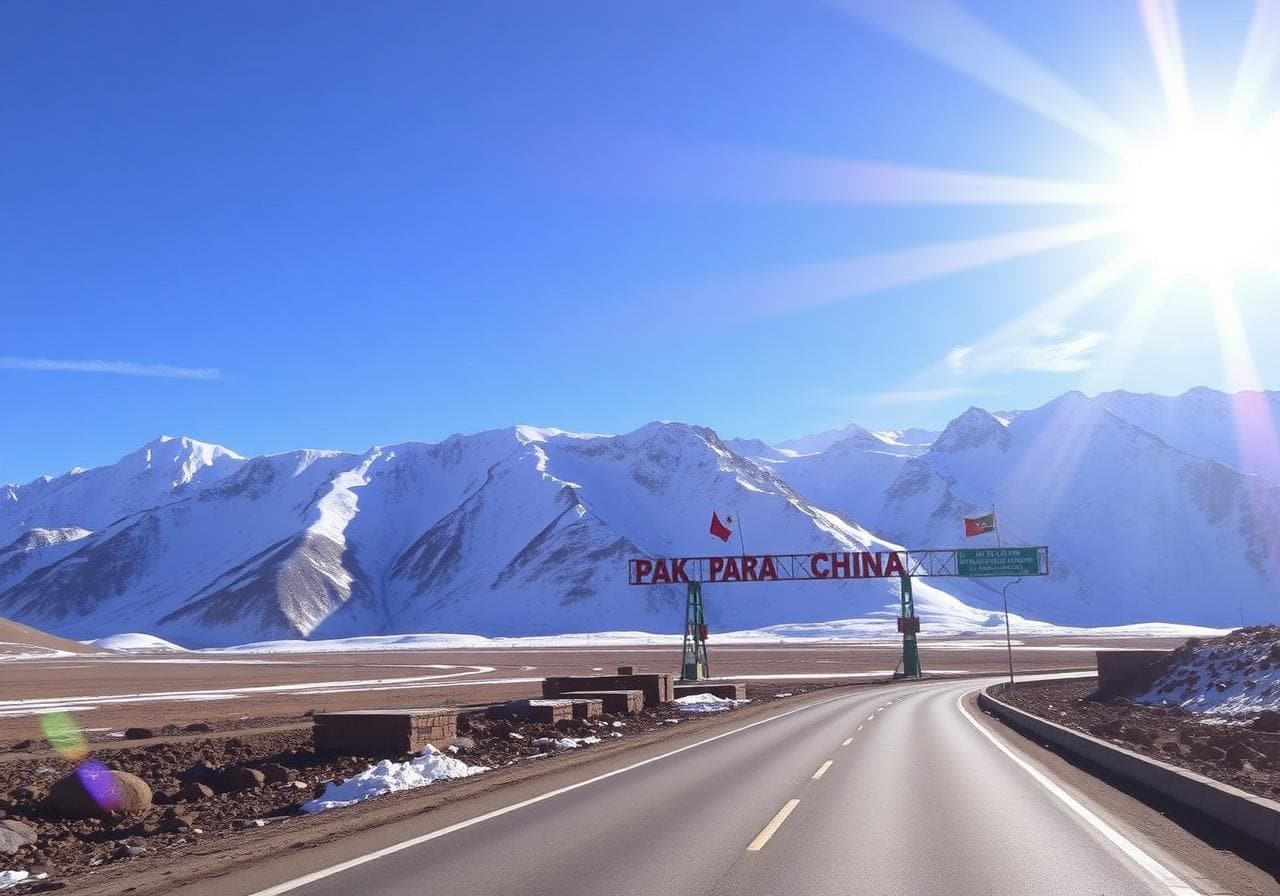
Khunjerab Pass is normally open into late November. It takes fresh snow from October onward and can shut for a day after a heavy fall, which is a reason to have slack in the itinerary rather than a reason to skip it — the pass under new snow with gold below it is better than the summer version.
Babusar Top closes with the first real snow, usually some time in October. That matters for the drive up: an autumn itinerary routed over Babusar is routed over a road it may not have, and the honest alternative is the Karakoram Highway through Besham. It is a longer first day and it is the one that actually runs.
Deosai shuts for the season. Naltar stays reachable by jeep until the snow arrives. See best time to visit Pakistan for how the rest of the year sits around this.
Days are the easy part — often sunny, comfortable in a fleece. Nights are where people are caught out. By late October it is at or below freezing after dark in Karimabad, colder in Gojal, and colder again at Duikar. Plenty of guesthouses heat rooms only for the evening, and hot water can be a schedule rather than a tap.
Pack for a European mountain autumn: a proper insulated layer, a hat and gloves for the dawn viewpoints, and shoes you do not mind being cold in. Nobody has ever regretted the extra jacket on this trip.
The window is a fortnight, the good rooms in Karimabad and Duikar are few, and domestic travellers want exactly the same days. Six to eight weeks ahead is comfortable. Two weeks ahead usually means taking what is left rather than the view you came for, and the view is the entire reason to come in October rather than in June.
We run an eight-day autumn trip built around four nights in Karimabad rather than two, on the basis that a tour spending two nights in Hunza and the rest on the highway is selling the drive rather than the season. Browse Hunza tour packages, or tell us your dates on WhatsApp at +92 371 5303587 and we will tell you what the colour is likely to be doing in that week — including when the answer is that you are a fortnight early. Our month-by-month Hunza guide covers the rest of the year.
Travel Expert
We run the northern season from first thaw to last pass closure, with resident teams in Hunza and Skardu.
Drag to browse — the row pauses while you read.
From your first WhatsApp message to final drop-off, we handle every detail so you can focus on the experience of a lifetime.
Operating Northern Pakistan tours since 2013. One of the most experienced GB operators.
Families, couples and corporate groups guided across the Karakoram since 2013.
A registered business invoicing under a company account. Travel insurance is not included — every package lists it under exclusions, and we recommend you arrange your own.
Resident teams in Hunza and Skardu give you real-time road updates and same-day pivots.
While you are travelling, the WhatsApp line is answered around the clock — usually inside five minutes.
Gilgit-Baltistan locals who run the Karakoram Highway, the Deosai crossing and the Raikot jeep track year-round.
Every trip is private — your own vehicle and driver, never a shared coach. Child-friendly hotels, and the pace is planned around the youngest and oldest in the group.
Book online and receive your confirmed itinerary on WhatsApp within 30 minutes.
Office PD 447, Line No. 6, Rawalpindi
Shigar Hashupi, near Hashupi Bagh
We provide 24/7 emergency support via WhatsApp for all actively travelling guests.